


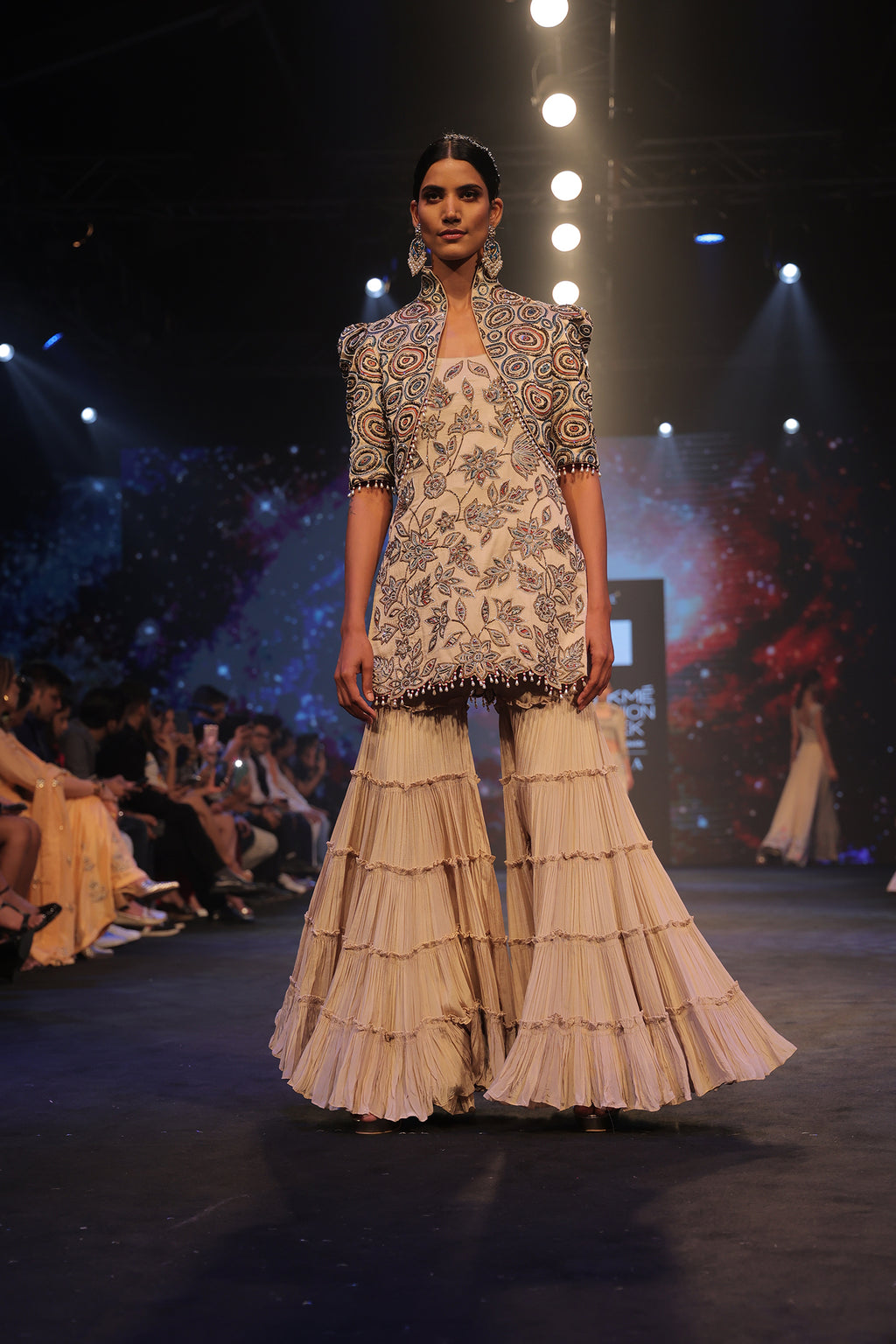
When to Wear a Sharara
The sharara works best when the function is festive-formal and you will be on your feet for most of it. Sangeet nights, Eid celebrations, and wedding receptions as a guest are all strong occasions for this silhouette. It moves on the dance floor, photographs from every angle, and holds its presence without requiring you to manage it the way a fitted lehenga sometimes does.
When to Wear a Gharara
The gharara carries a ceremonial weight that the sharara does not. It has deep roots in South Asian formal dressing and that heritage shows in how the silhouette is received in a room. For Nikah ceremonies, Walima functions, and Engagement events, the gharara set is the right choice - not as an alternative to a lehenga, but as an equally considered option with its own distinct tradition. The simplest way to remember the difference: if the event reads festive, wear a sharara. If it reads ceremonial, wear a gharara.
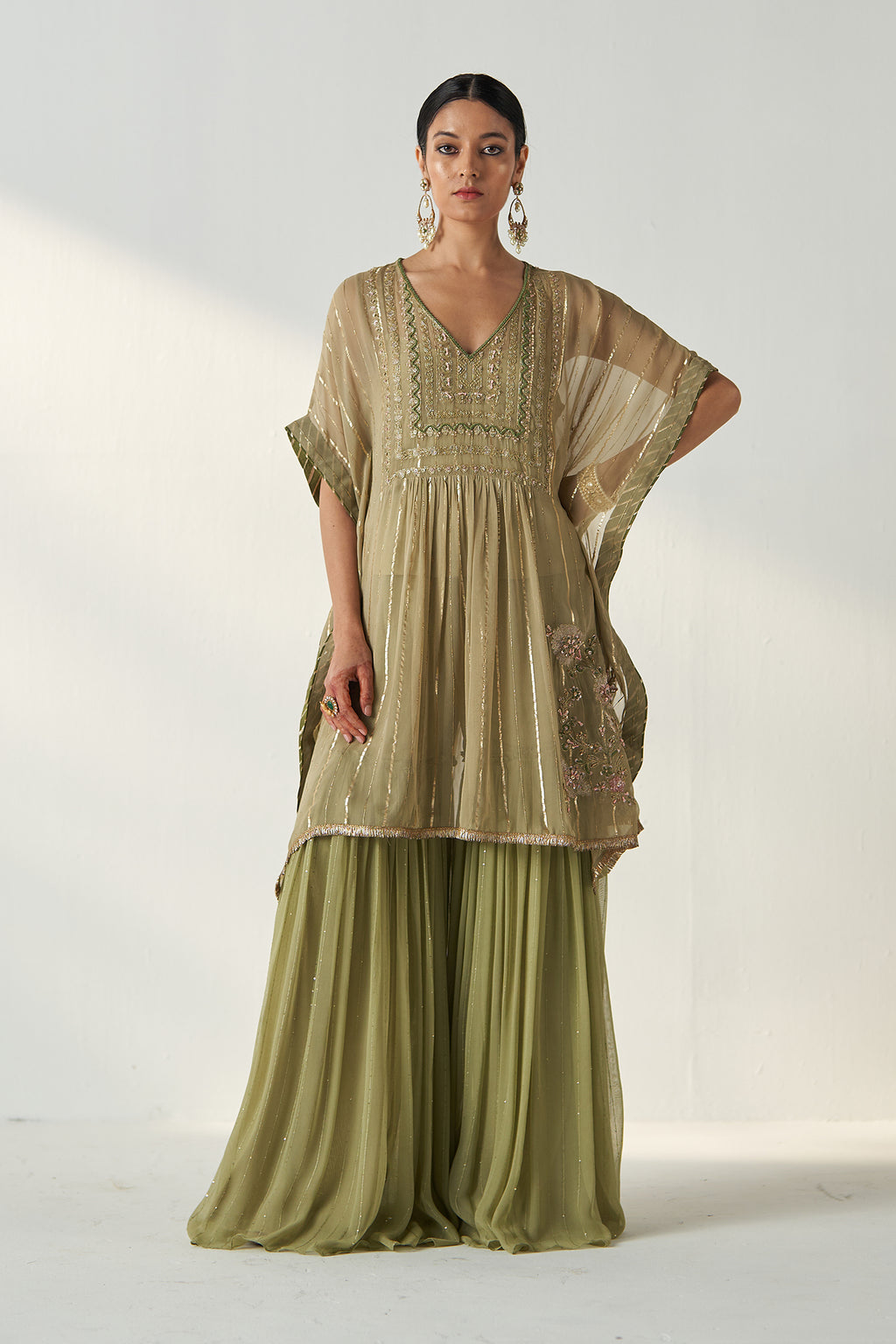
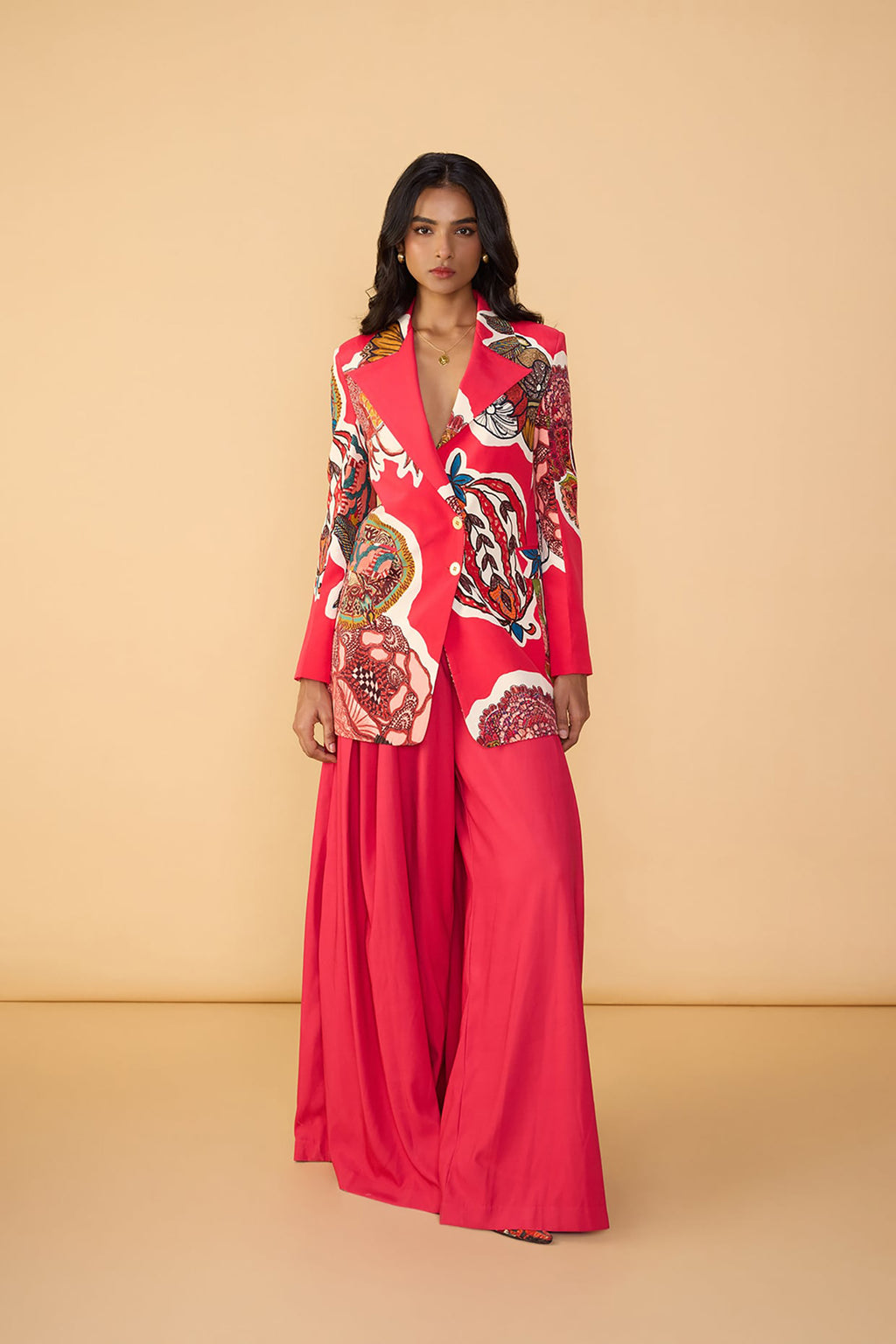
When a Palazzo Works - and When It Does Not
The palazzo is the only silhouette of the three that is not occasion-specific. A Mehendi, a pre-wedding brunch, a festive lunch, or an office celebration - the palazzo handles all of these without effort. In a richer fabric like crepe, georgette, or a silk blend, the same silhouette moves into semi-formal territory. Taali and Studio Bagechaa carry co-ord and skirt sets that approach wide-leg dressing with fabrics and finishes that lift the silhouette well beyond casual. What the palazzo cannot do is carry a room full of lehengas and heavy embroidery. It will read as underdressed regardless of the fabric quality - and that is not a failure, it is simply the wrong tool for that specific occasion.

