


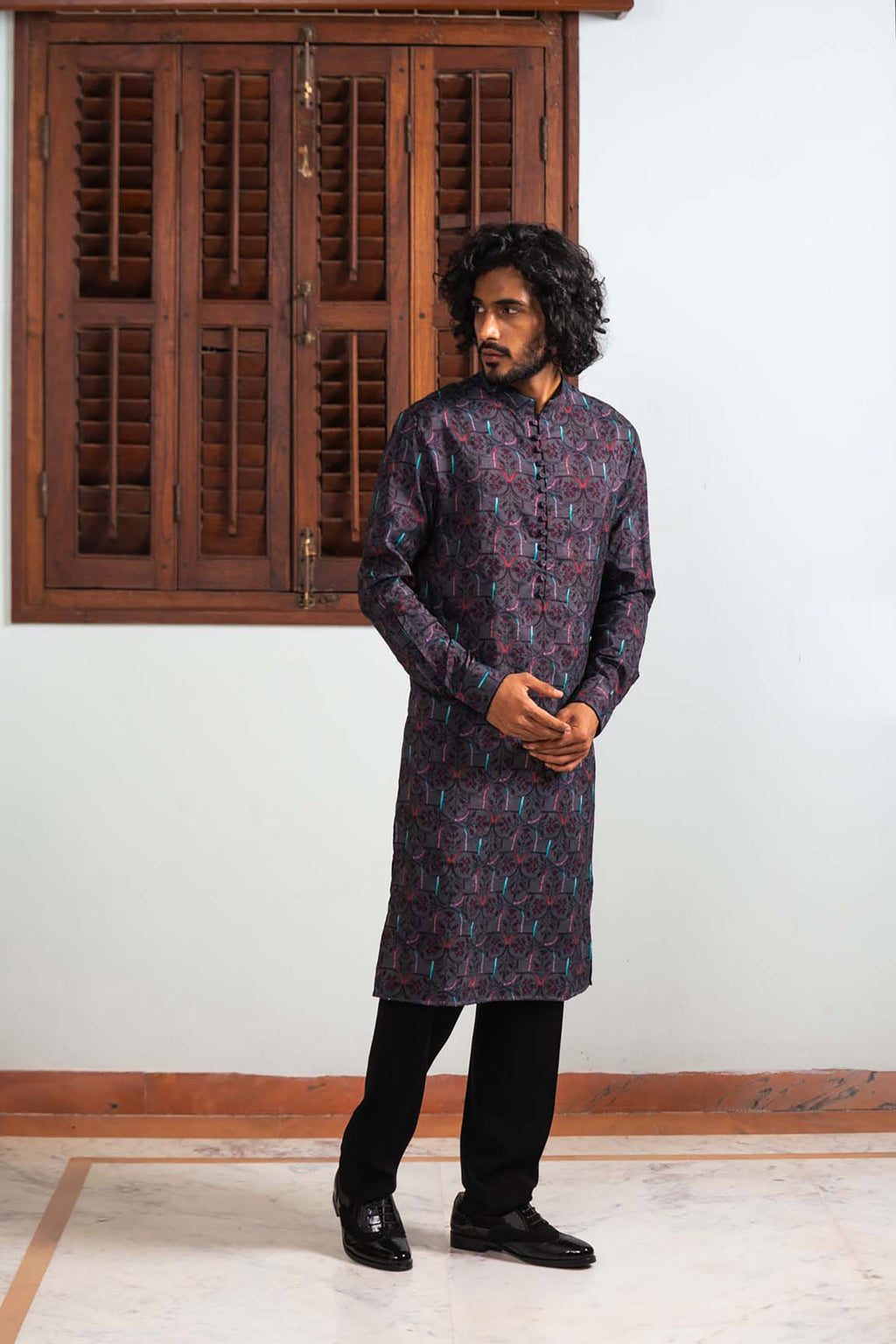
When to Wear a Kurta Set
The kurta set is right for Mehendi, Haldi, Sangeet, and any daytime function where a sherwani would feel like too much. For guests attending multiple functions across a wedding weekend, a well-chosen men's kurta set covers most events without requiring a full formality change.
In 2026, independent labels are approaching the kurta set differently. Midushi Bajoria's silk chanderi kurta sets - the Yusuf Mustard and the Rahim Black - are built for evening Sangeet functions where the dress code is smart but not ceremonial. The fabric has enough sheen to read formally under indoor lighting without the weight of heavier occasion wear. Studio Bagechaa's Janak Ivory and Neelesh Blue kurta sets approach the silhouette with proportions that feel current - cuts that sit above the standard ethnic wear template without departing from it.
For fabric: cotton and linen for daytime summer functions, silk blends and raw silk for evening. The fabric shift alone moves a kurta set from casual-festive to formal-festive without changing anything else about the look.
When to Wear a Sherwani
The sherwani belongs at the Baraat, Nikah, main wedding ceremony, and Reception. For the groom, it is the default choice at the primary ceremony. For close family - brothers, the groom's father, a best man - a sherwani set signals the right occasion dressing without competing with the groom's look.
For fabric: raw silk and brocade work best for winter and evening ceremonies - they carry the visual weight a sherwani demands. Velvet is the strongest choice for December and January weddings. For summer ceremonies, a lighter silk blend or chanderi keeps the formality without the heat.
Construction matters more here than anywhere else in men's ethnic wear. The shoulder line, the chest fit, and the length proportion all have to be correct - a poorly fitted sherwani reads worse than a well-fitted kurta set every time. This is where independent designer construction quality separates itself from mainstream occasion wear. Studio Bagechaa's achkan sets - including the Rustom Ivory, the Jauhar Blue, and the Kunj Black - are built with the same attention a tailored formal coat demands. The Jauhar Blue in particular works well for grooms or close family at evening ceremonies where the dress code is deep colour and heavy fabric.
For Nikah and Walima ceremonies in the Gulf - UAE, Saudi Arabia, or Kuwait - the sherwani remains the most appropriate choice for the groom and immediate family. The silhouette's ceremonial weight translates across South Asian diaspora communities regardless of geography.
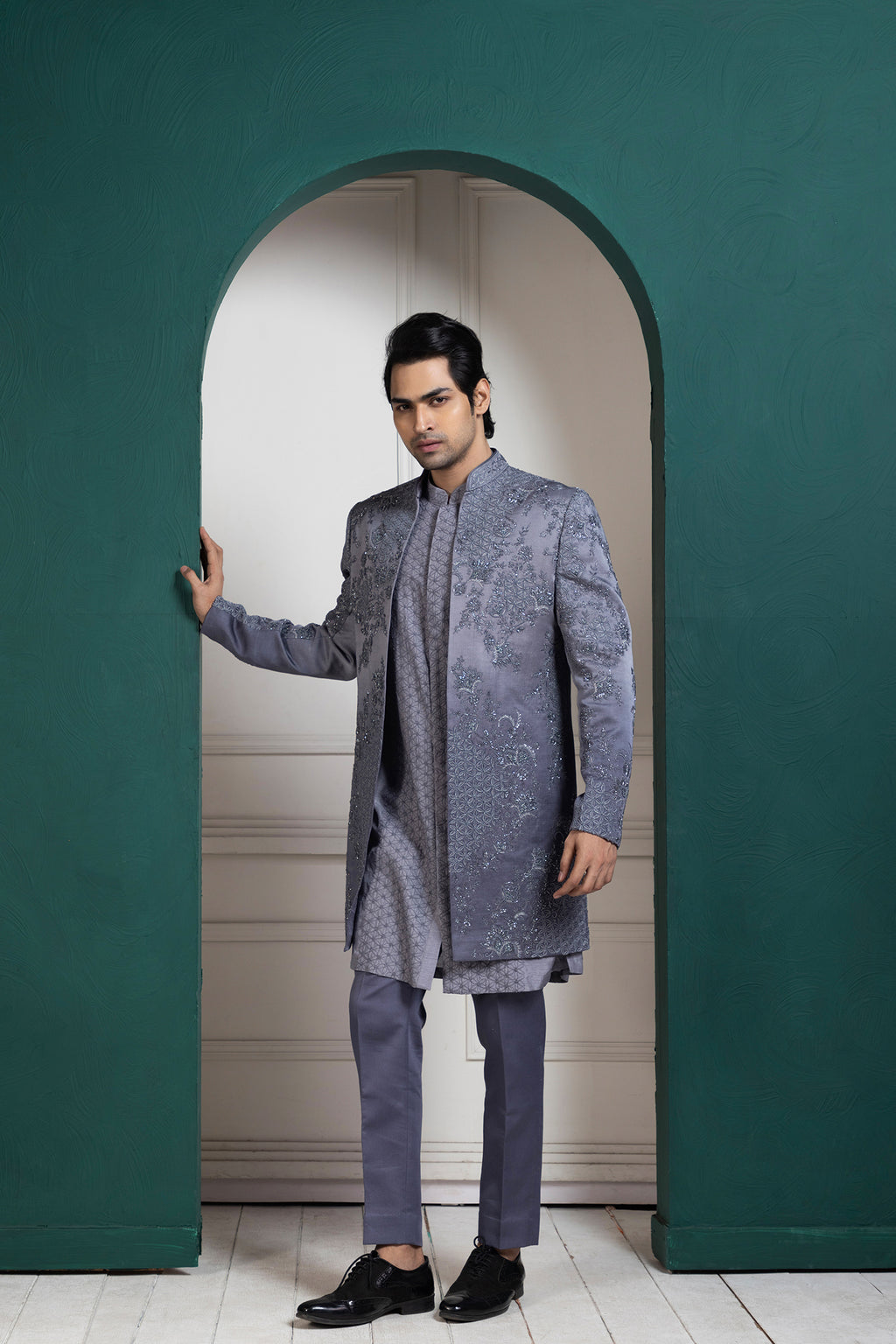
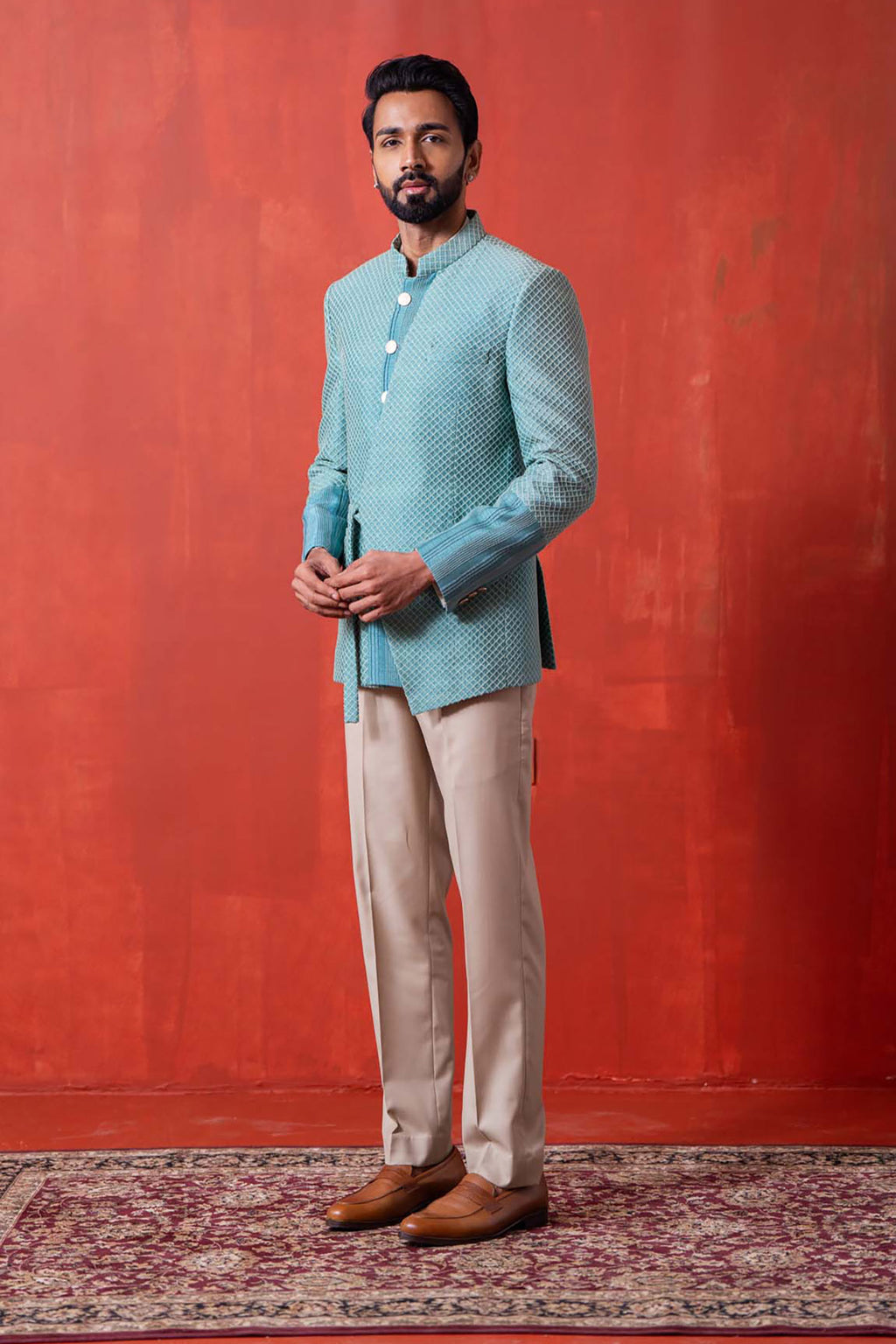
When to Wear a Bandhgala
The bandhgala is the strongest choice for Reception dinners, Engagement functions, and formal evening events where you want to dress seriously without committing to a sherwani. It also travels well - it works across mixed South Asian and Western guest lists, and for Indian weddings in Canada and the UK where the dress code is formal but not strictly traditional.
Rivaaj Couture's Velvet Jodhpuri and Velvet Overlap Jodhpuri sets are the strongest options in this category across independent labels - the velvet fabric gives them the weight and richness a bandhgala needs to read formally, while the Jodhpuri cut keeps the silhouette contemporary and well-proportioned. For a Reception or Engagement where the room is mixed in dress code, these are the bandhgala sets worth looking at first.

